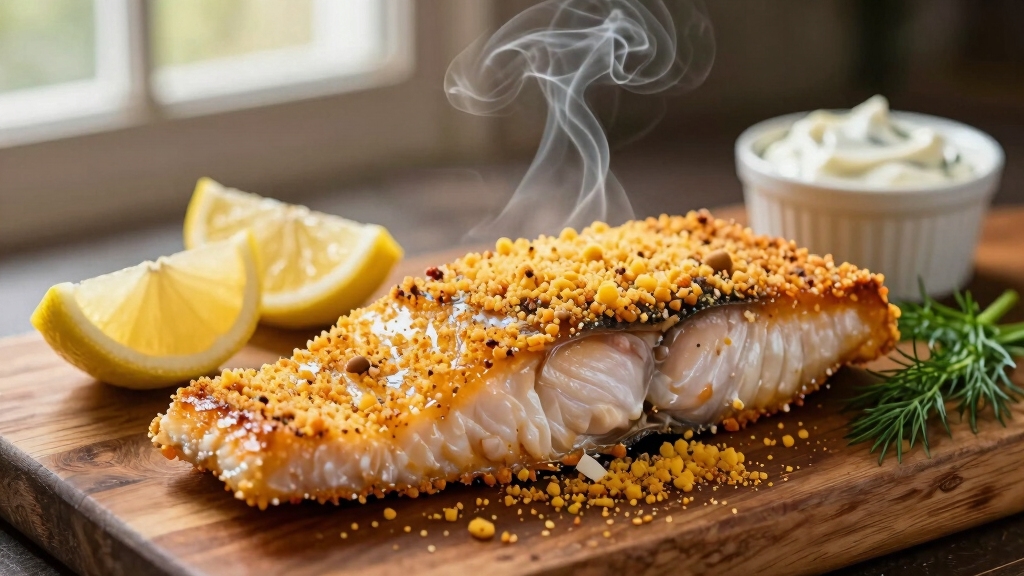
Smoked Walleye Recipe: Achieve Restaurant-Quality Taste
Choose fresh, firm walleye fillets and brine them overnight with brown sugar and salt for moist, flavorful fish.
Pat dry to form a tacky pellicle that helps smoke cling. Use mild woods like apple or pecan and smoke low and slow between 110°F and 155°F for tender, flaky results.
For a crispy finish, try high-heat smoking around 450°F with a flavorful coating. Perfect your technique, and you’ll master every step for irresistible smoked walleye.
Key Takeaways
- Choose fresh, firm, skin-on walleye fillets with consistent thickness for even smoking and moisture retention.
- Brine fillets overnight in a cooled wet brine for moisture and flavor, then air-dry to form a tacky pellicle.
- Use mild woods like apple or pecan for balanced smoke flavor and maintain steady airflow during smoking.
- Smoke at low temps gradually (110°F to 155°F) or high temp (~450°F) until internal temperature reaches 140°F–145°F.
- Aim for firm, flaky texture with opaque flesh and crispy skin; refrigerate smoked walleye within two hours for safety.
Quick Reference for Perfect Smoked Walleye
| Ingredient / Tool | Action / Step |
|---|---|
| Walleye Fillets (skin-on, firm, evenly thick) | Select fresh fillets free of discoloration and odors. Keep chilled below 40°F until brining. |
| Brown Sugar & Canning Salt | For dry brine: rub evenly on fillets and refrigerate 24–48 hours, rotating bags every 8 hours. For wet brine: dissolve in water with optional soy sauce and spices, soak 8–12 hours in fridge. |
| Milk (optional) | Soak fillets 15 minutes to tenderize before breading. |
| Egg Wash (2 eggs + 1 tbsp water) | Dip fillets to help breading adhere. |
| Dry Coating Mix (bread crumbs, parmesan, instant mashed potato flakes, paprika, BBQ rub) | Press firmly onto fillets for a crispy crust. |
| Wood Chips (Apple, Cherry, Pecan, Hickory) | Choose wood to complement fish flavor. Minimum 2 hours smoke. |
| Smoker / Grill / Oven | Low-temp smoking: 110–155°F until internal temp 140°F. High-temp smoking: 450°F for ~20 minutes until internal temp 145°F. |
| Meat Thermometer | Monitor internal temp of thickest part of fillet for perfect doneness. |
| Cooling Rack / Fan | Pat fillets dry after brining and air-dry 2 hours to form pellicle for smoke adherence. |
| Storage | Refrigerate smoked walleye within 2 hours in airtight container; freeze for longer storage. |
Choose the Best Walleye Fillets for Smoking
Selecting the right walleye fillets is essential to achieving a flavorful, tender smoked fish.
Choosing quality walleye fillets is key to creating delicious, tender smoked fish every time.
You’ll want fresh fillets that are firm to the touch and free of any discoloration or strong odors. Look for fillets with a consistent thickness; this guarantees even smoking and prevents parts from drying out.
Choose skin-on fillets when possible; the skin helps retain moisture and adds texture during smoking. When filleting, slice along the backbone and carefully cut along the sides to maximize surface area, improving flavor absorption later.
Avoid fillets with excessive fat, as they can release oils and cause flare-ups. By picking quality fillets with ideal size and thickness, you set the foundation for a perfectly smoked walleye, bursting with rich, delicate flavors.
Properly handle and store your fillets by keeping them chilled below 40°F to preserve freshness before brining and smoking, ensuring the best final result with optimal moisture retention.
Brine Walleye for Maximum Smoked Flavor
Once you’ve chosen the best fillets, brining is your next step to infuse deep flavor and keep the walleye moist throughout smoking.
You can opt for wet brining, soaking your fillets in a blend of brown sugar, non-iodized salt, soy sauce, water, and spices for 8 hours or overnight in the fridge.
Alternatively, dry brining involves rubbing a mixture of brown sugar, canning salt, and coarse black pepper directly onto the fillets.
Refrigerate them for 24 to 48 hours while rotating the bags every 8 hours. Both methods enhance the fish’s natural taste and texture, ensuring every bite stays tender and flavorful as the smoke slowly penetrates during cooking.
Proper brining is essential to achieving that perfect smoked walleye experience.
For best results, always ensure your brine is fully cooled before submerging the fish to prevent any partial cooking during the process.
Create the Perfect Pellicle Before Smoking

Although brining locks in flavor and moisture, developing the perfect pellicle is what truly prepares your walleye for smoking.
After brining, pat your fillets dry and place them on a rack in the refrigerator to air-dry for about two hours.
Use a fan to speed up this process, which helps form that essential tacky surface.
This sticky layer isn’t just for show; it’s key to smoke adhesion, allowing the smoky flavors to penetrate deeply and evenly.
Check the fillets by lightly touching them; they should feel dry but slightly tacky, not wet or slimy.
Creating this pellicle guarantees your walleye won’t lose moisture during smoking and develops a beautiful, appetizing texture and color once smoked.
Don’t rush this step; it makes all the difference.
For best results, ensure your smoker is properly cleaned and maintained to avoid unwanted odors that can affect the pellicle’s formation and flavor.
Select the Right Wood for Smoked Walleye Flavor
The aroma of apple wood smoke gently infuses your walleye with a mild, sweet flavor that enhances the fish without overpowering it.
Choosing the right wood is vital to complement walleye’s delicate taste.
Cherry wood offers a balanced smoke profile, perfect for longer sessions.
Hickory provides a stronger, more robust flavor when mixed with lighter woods.
Pecan adds a rich, nutty undertone, especially suited for skin-on fillets.
Remember, at least two hours of smoke sets the foundation before you finish cooking.
- Apple wood: mild and sweet, ideal for subtle flavor
- Cherry wood: balanced, great for extended smoking
- Hickory wood: strong, pairs well with lighter woods
- Pecan wood: nutty, enhances skin-on fillets
- Minimum two-hour smoke for prime infusion
Oak wood is another excellent choice due to its medium smoky taste that offers a balanced flavor without overpowering delicate fish like walleye.
Bread and Coat Walleye for Crispy Texture
After selecting the perfect wood to infuse your walleye with flavor, you’ll want to focus on creating a crispy, golden crust that locks in moisture and enhances each bite.
Start by soaking your fillets in milk for about 15 minutes to tenderize and prepare the surface. Next, dip each piece into a smooth egg wash made from two eggs and a tablespoon of water. This acts as the glue for your dry coating.
Then press the fillets firmly into a flavorful dry mix of bread crumbs, parmesan, instant mashed potato flakes, paprika, and BBQ rub. This combination crisps beautifully when cooked, forming a crunchy exterior that contrasts the tender, smoky fish inside.
Arrange your coated walleye on a greased sheet, ready to deliver irresistible texture and taste. For best results, ensure your cooking surface is properly preheated and lightly oiled to achieve an even, golden crust and prevent sticking, as recommended for skillet preparation.
Smoke Walleye Using Low-Temperature Method
When you choose to smoke walleye using the low-temperature method, you’ll gently coax out delicate flavors while preserving the fish’s tender texture.
Start by setting your smoker to 110°F (43°C) for the first hour, then gradually increase to 140°F (60°C) for another hour.
Finish at 155°F (80°C) until the fillets reach an internal temperature of 140°F (60°C).
This slow approach minimizes oil seepage and surface bubbling, keeping the flesh moist and flaky.
Begin with properly brined and pellicle-formed fillets for ideal smoke adherence.
Use mild woods like apple or cherry for a subtle, sweet smoke flavor.
Maintain steady airflow and temperature control throughout smoking.
Monitor internal temperature closely with a reliable meat thermometer.
Allow the smoke to infuse gently, enhancing flavor without drying the fish.
For best results, monitor the thickest part of the fillet, avoiding bone and skin, to ensure accurate internal temperature readings.
Use High-Temperature Smoking for Crispy Walleye
To get that perfect crispy texture on your walleye, you’ll want to crank your smoker up to around 450°F. It might sound high, but trust me, high-temperature smoking is the way to go!
Not only does it cook the fish quickly, but it also gives you that satisfying crunch on the outside while keeping the inside nice and tender.
Just a quick tip—make sure to keep an eye on the internal temperature as you go. You’re aiming for 145°F to ensure your walleye isn’t just safe to eat but also absolutely delicious. Happy smoking!
Also, avoiding foil wrapping during smoking is key to achieving crispy skin as foil traps moisture and softens the texture.
Optimal Smoking Temperature
Crank up the heat to achieve a crispy, flavorful walleye that delights with every bite. High-temperature smoking at around 450°F for roughly 20 minutes locks in moisture while creating a golden crust.
This method rapidly raises the internal temperature to 145°F, ensuring safe, juicy results without drying out your fish. You’ll want to monitor the temperature closely to avoid overcooking, allowing the smoke to infuse rich aromas while crisping the surface beautifully.
Use indirect heat on pellet or Traeger grills for even cooking. Aim for an internal temperature of 145°F to signal doneness. Maintain steady airflow to prevent surface oil seepage.
Avoid prolonged smoking times that can toughen the flesh. Pair with wood like apple or pecan for balanced smoke flavor. This balance of heat and smoke releases walleye’s full potential.
Before starting, always inspect hoses and vents to ensure safe and efficient smoker operation.
Achieving Crispy Texture
Mastering high-temperature smoking transforms your walleye into a crispy, flavorful masterpiece that’s sure to impress.
By smoking at 450°F for about 20 minutes, you lock in moisture while creating a golden, crunchy exterior. Keep a meat thermometer handy; you’re aiming for an internal temperature of 145°F.
This method caramelizes the natural sugars and crisps the skin, enhancing both texture and flavor.
To maximize taste, consider using hardwood pellets for a clean burn that complements the fish’s natural flavors.
Here’s a quick guide to help you:
| Step | Tip |
|---|---|
| Temperature | Maintain 450°F for prime crispiness |
| Time | Smoke for 20 minutes |
| Doneness Indicator | Internal temp reaches 145°F |
Check Doneness and Texture in Smoked Walleye
You’ll know your smoked walleye is done when it reaches an internal temperature of 140°F to 145°F, depending on how you’re smoking it.
Just keep an eye on the texture—you’re looking for firm but flaky flesh, plus that slightly sticky pellicle surface. That’s when you know you’ve nailed it!
Also, look out for some visual cues.
For instance, the absence of surface bubbles is a good sign that your walleye is perfectly done and ready for a satisfying bite.
Remember to refrigerate your smoked walleye within two hours to ensure safe storage and handling.
Internal Temperature Targets
When smoking walleye, monitoring internal temperature is essential to achieve the perfect balance of doneness and texture. You’ll want to use a reliable meat thermometer to track progress and avoid overcooking.
For low-temperature smoking, aim for an internal temperature of around 140°F (60°C) to keep the fish tender and moist. If you’re using high-temperature methods, reaching 145°F guarantees safe consumption and flaky flesh.
Keep these temperature targets in mind:
- Low-temp smoking: 140°F (60°C) for moist, delicate texture
- High-temp smoking: 145°F for firmer, flakier walleye
- Gradual temperature increases prevent surface bubbling
- Two-stage smoking allows better heat control and doneness
- Always insert the thermometer into the thickest part of the fillet
This precise control guarantees your smoked walleye turns out perfectly every time.
Texture and Appearance Indicators
Along with monitoring internal temperature, paying attention to texture and appearance helps you know exactly when your smoked walleye is done.
As you smoke, look for a firm, flaky texture. Gently press the fillet; it should spring back without feeling mushy. The flesh turns opaque white, signaling doneness.
You might notice surface bubbles or slight oil seepage; these are normal and can be wiped away. Also, check the pellicle’s stickiness after brining and drying. This guarantees smoke adheres well, enhancing flavor and appearance.
When your walleye fillets exhibit these signs—firm, opaque, slightly sticky surface—you’ve hit the perfect balance of smoky flavor and tender texture.
Trust these visual and tactile clues alongside your thermometer to serve a flawlessly smoked walleye every time.
Finish Smoked Walleye: Dehydrator vs. Oven Jerky
Although smoking imparts rich flavor and initial preservation, finishing your smoked walleye as jerky demands careful choice between a dehydrator and an oven.
Smoking adds flavor and preservation, but drying smoked walleye into jerky requires choosing between dehydrator and oven.
A dehydrator offers precise temperature control and consistent airflow, ideal for drying fish evenly without overcooking.
Ovens, while more accessible, can have uneven heat distribution, requiring frequent monitoring to avoid toughness or burning.
Both methods transform your smoked fillets into chewy, flavorful jerky, but your choice affects texture and drying time.
Consider these factors when finishing your smoked walleye:
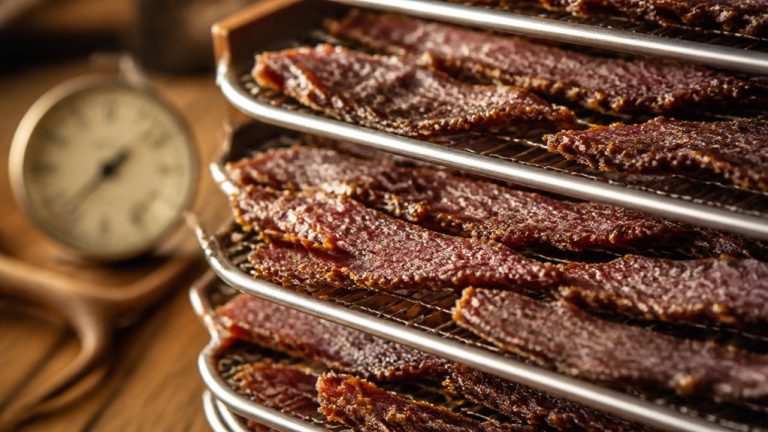
- Dehydrators maintain low temperatures (~140°F) steadily.
- Ovens may need door propped open for airflow.
- Dehydrators preserve moisture balance better.
- Oven drying can speed up jerky production.
- Monitoring is vital to prevent over-drying or brittleness.
Choose what fits your setup and desired jerky texture best.
Frequently Asked Questions
Can I Smoke Walleye Without Skin on the Fillets?
Yes, you can smoke walleye without the skin on the fillets, but keep in mind the skin helps hold the fish together during smoking.
Without it, you’ll want to handle the fillets gently and consider using a sturdy breading or coating to protect the delicate flesh.
Also, monitor temperature carefully to prevent drying out.
Removing skin might slightly change texture, but with proper technique, you’ll still get flavorful, smoky walleye.
How Long Should I Soak Walleye in Milk Before Breading?
Don’t worry about soaking your walleye in milk for too long. It only needs about 15 minutes.
This brief soak tenderizes the fish and helps the breading stick better, giving you a crispier, more flavorful crust.
So, just submerge your strips in milk, let them soak, then dredge them in your breading mixture.
This simple step transforms your walleye into a deliciously moist and crunchy treat every time.
What Is the Best Way to Store Leftover Smoked Walleye?
You should store leftover smoked walleye in an airtight container or wrap it tightly in plastic wrap to keep it fresh.
Refrigerate it promptly, ideally within two hours of smoking, and consume within 3 to 4 days.
For longer storage, freeze the fish in vacuum-sealed bags or heavy-duty freezer bags to prevent freezer burn.
When ready, thaw it slowly in the fridge to maintain its smoky flavor and moist texture.
Can I Use Regular Table Salt Instead of Canning Salt for Dry Brining?
Imagine your walleye fillets getting a bit too salty or developing a metallic aftertaste. That’s what can happen if you use regular table salt instead of canning salt for dry brining.
You shouldn’t swap it because table salt often contains additives like iodine and anti-caking agents that can alter flavor and texture.
Stick with canning salt to guarantee a clean, crisp brine that enhances your fish perfectly without unwanted bitterness.
Is It Necessary to Rotate Bags During Dry Brining for Even Flavor?
Yes, you should rotate bags during dry brining to make sure even flavor distribution.
When you flip the bags every 8 hours, you help the brine penetrate all sides of the fillets uniformly.
This prevents any one part from becoming overly salty or bland.
Plus, rotating helps the seasoning settle evenly, giving you consistently flavorful and tender walleye throughout.
Don’t skip this step if you want the best results.
Elevate Every Meal With Tender, Smoky Walleye
Now that you’ve mastered the art of smoking walleye, you’re holding a golden ticket to flavor paradise. From tender, smoky layers to that irresistible crispy crust, each bite sings a smoky symphony.
Whether you choose the gentle low heat or fiery high-temp route, your walleye will dance with rich, wood-kissed notes.
So, fire up your smoker and let the magic unfold. Your taste buds are in for a smoky, savory adventure they won’t forget.