Can I Freeze Smoked Salmon? Expert Tips to Preserve Flavor
You can freeze smoked salmon without losing quality if you act fast and prepare it properly. Choose dry-cured or vacuum-sealed cold-smoked salmon for best results, as higher moisture types risk texture loss.
Pat slices dry, remove bones, and portion servings to avoid refreezing. Wrap tightly in plastic, double-wrap, or vacuum-seal to prevent freezer burn.
Thaw safely in the fridge or cold water. Keep it cold and consume promptly to maintain safety and taste. Here’s how to handle each step carefully.
Key Takeaways
- Yes, smoked salmon can be frozen if properly prepared and promptly frozen to maintain quality and safety.
- Dry-cured and vacuum-sealed cold-smoked salmon freeze best with minimal texture loss.
- Portion, pat dry, remove bones, and wrap tightly in plastic wrap or vacuum-seal before freezing.
- Freeze salmon within two hours of handling and store at 0°F (-18°C) or below.
- Thaw safely in the refrigerator or cold water and consume immediately after thawing.
Can You Freeze Smoked Salmon Without Losing Quality?

You can freeze smoked salmon without losing quality if you follow proper techniques, but the outcome depends on the type of smoked salmon and packaging method.
To maintain texture and flavor, freeze the salmon promptly—within two hours of handling or one hour if above 90°F. Pat slices dry to reduce ice crystal formation and remove any bones for safety.
Vacuum sealing or tightly wrapping in plastic wrap, followed by aluminum foil or placing in airtight containers, prevents freezer burn by excluding air. Store the salmon at 0°F (-18°C) or below, freezing rapidly to minimize large ice crystals, which can damage texture.
Properly frozen smoked salmon retains quality for up to three months, with best flavor within two months. Avoid thawing and refreezing to preserve texture and safety.
For extended storage, vacuum-sealed smoked fish can last up to 6–12 months frozen when kept at proper temperatures.
Which Types of Smoked Salmon Freeze Best?
When deciding which types of smoked salmon freeze best, it’s important to take into account the curing method and moisture content.
Choosing the best smoked salmon for freezing depends on curing method and moisture levels.
Dry-cured smoked salmon contains less moisture, making it more resistant to ice crystal formation and subsequent texture degradation during freezing.
In contrast, brined smoked salmon has higher water content, increasing the risk of mushiness post-thaw due to intracellular ice crystals rupturing cell membranes.
Cold-smoked salmon, often vacuum-sealed, freezes well if packaging excludes air to prevent freezer burn.
Hot-smoked salmon, being fully cooked, tolerates freezing but may slightly lose firmness.
To preserve ideal texture and flavor, prioritize dry-cured and vacuum-packed cold-smoked varieties for freezing.
Avoid freezing high-moisture brined salmon unless immediate consumption follows thawing to minimize quality loss.
Properly handling and storing the salmon before freezing is essential to maintain freshness and prevent quality deterioration.
How to Prepare Smoked Salmon for Freezing?
Before freezing smoked salmon, proper preparation is essential to maintain its texture and flavor.
You need to minimize moisture and prevent ice crystals that cause mushiness, especially with brined salmon. Follow these steps carefully:
- Portion the salmon into meal-sized servings to avoid repeated thawing and refreezing.
- Pat each portion dry with a paper towel to reduce surface moisture and ice formation.
- Remove any bones precisely using tweezers, ensuring a smooth eating experience after thawing.
- Layer slices between sheets of cling film to prevent them from sticking together, preserving texture.
These evidence-based practices help maintain the quality of smoked salmon during freezing by controlling moisture and exposure to air, setting the stage for effective packaging and long-lasting flavor preservation. Additionally, ensuring that all surfaces are thoroughly dried before freezing helps prevent ice crystals and preserves the salmon’s texture.
Packaging Tips to Keep Smoked Salmon Fresh in the Freezer
Locking in freshness starts with proper packaging techniques that prevent air exposure and freezer burn, critical factors in preserving smoked salmon’s texture and flavor.
Begin by portioning the salmon and patting it dry to minimize ice crystal formation.
Wrap each portion tightly in plastic wrap, ensuring no air pockets remain.
For added protection, double-wrap with aluminum foil or place the wrapped portions into airtight freezer bags or containers.
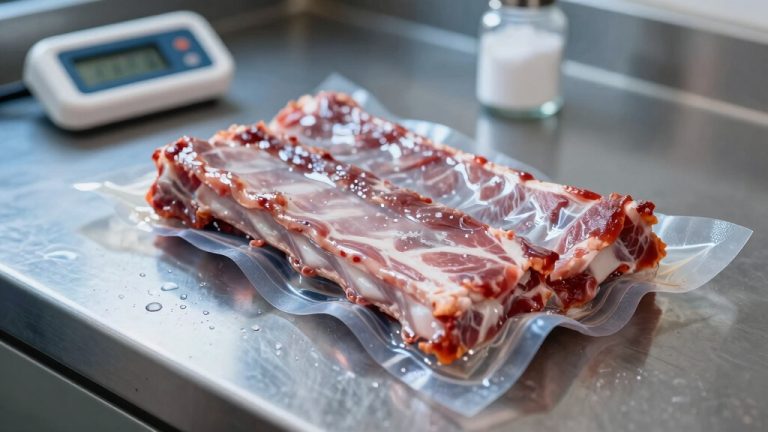
Vacuum sealing is ideal, especially for cold-smoked salmon, as it effectively eliminates oxygen.
Label each package with the freezing date using a permanent marker for precise inventory management.
Keep your freezer temperature at or below 0°F (-18°C) and freeze salmon promptly within two hours of handling to maintain peak quality and safety.
Proper packaging and storage help limit oxygen exposure and prevent quality degradation during freezing.
What’s the Safest Way to Thaw Smoked Salmon?

Proper freezing and packaging set the stage for safely thawing smoked salmon without compromising its texture or safety. To thaw correctly, follow these evidence-based steps:
- Thaw in the refrigerator for 8-12 hours, keeping salmon covered to prevent contamination and moisture loss.
- Use the cold water method if time is limited: seal salmon in an airtight bag and submerge in cold water, changing water every 30 minutes.
- Avoid thawing at room temperature to minimize bacterial growth risks.
- Consume immediately after thawing to maintain quality and prevent spoilage.
Refrigerator thawing preserves texture by allowing gradual temperature increase, while cold water thawing accelerates safely. Both methods prevent bacterial proliferation, ensuring your smoked salmon remains safe and enjoyable. Maintaining a storage temperature below 40°F (4°C) during thawing is crucial for food safety.
Frequently Asked Questions
Can Frozen Smoked Salmon Be Used Directly in Sushi Recipes?
You shouldn’t use frozen smoked salmon directly in sushi recipes without proper thawing.
Frozen smoked salmon must thaw in the refrigerator for 8-12 hours to preserve texture and safety. Using it frozen risks an unpleasant texture and potential bacterial hazards.
Always thaw it covered to avoid contamination, then consume immediately. Proper thawing guarantees the salmon maintains flavor and firmness, essential for sushi quality and safety.
Does Freezing Smoked Salmon Affect Its Nutritional Value?
Freezing smoked salmon won’t throw the baby out with the bathwater when it comes to nutrition.
You’ll retain most proteins, omega-3 fatty acids, and vitamins if you freeze it properly and consume it within three months.
Minor nutrient loss can occur from oxidation or freezer burn if packaging isn’t airtight.
To preserve its nutritional value, vacuum-seal the salmon, freeze promptly, and avoid repeated thawing, ensuring you get the most from your fish.
How Long Can Smoked Salmon Be Left Out Before Freezing?
You should freeze smoked salmon within 2 hours of handling to guarantee safety and quality.
If ambient temperatures exceed 90°F (32°C), reduce this window to 1 hour to prevent bacterial growth.
Delaying beyond these limits risks spoilage and texture degradation.
Always handle smoked salmon promptly, package it properly, and freeze it quickly to maintain peak texture, flavor, and food safety standards.
Can Smoked Salmon Be Frozen Multiple Times Safely?
You shouldn’t freeze smoked salmon multiple times; each freeze-thaw cycle markedly degrades texture and flavor.
Studies show quality drops sharply after just one freeze-thaw, risking mushiness and freezer burn.
To preserve taste and safety, freeze in single portions, thaw only what you’ll consume, and avoid refreezing.
Proper vacuum packaging and rapid freezing help maintain integrity, but repeated freezing still compromises the product’s sensory and microbial stability.
Are There Differences in Freezing Wild vs. Farmed Smoked Salmon?
You’ll find minimal differences in freezing wild versus farmed smoked salmon regarding safety and texture.
Both types require proper packaging to prevent freezer burn and rapid freezing to limit ice crystal damage.
However, wild salmon often has leaner flesh, which may better withstand freezing without mushiness compared to the higher-fat content in farmed salmon.
Still, follow standard freezing protocols for best results regardless of origin.
Extend Freshness Safely With Vacuum-Sealed Storage
Freezing smoked salmon doesn’t have to mean sacrificing quality. You just need the right approach. Think of it as hitting pause on freshness: vacuum-seal your fish, freeze it quickly, and thaw it safely in the fridge.
Cold-smoked varieties handle freezing better than hot-smoked, so choose accordingly. By following these evidence-backed steps, you’ll preserve texture, flavor, and safety. This ensures your smoked salmon tastes just as good after freezing as it does fresh. Why settle for less?