Homemade Smoked Sausage Recipe: Easy and Flavorful
To make homemade smoked sausage, start with 70% lean shoulder meat and 30% fat, keeping meat cold to guarantee texture. Grind twice for desired consistency, then mix in salt, Cure #1, spices, and ice water until sticky for protein binding.
Stuff tightly into 28–32 mm hog casings, prick air pockets, and smoke gradually from 110°F to 250°F over hardwoods like hickory or apple. Cook until 160°F internally, then chill rapidly in ice water.
Discover detailed steps to perfect flavor, safety, and storage.
Key Takeaways
- Use a 70% lean to 30% fat meat ratio, preferably shoulder meat or a meat-and-beef blend, cut into uniform cold cubes before grinding.
- Grind meat cold with a coarse plate, mix with salt, Cure #1, spices, and ice water until sticky for proper binding and flavor.
- Stuff mixture tightly into 28–32 mm hog casings, prick air pockets, and keep everything cold to preserve texture and seasoning.
- Smoke sausages at 225–250°F using hardwoods like hickory or apple, starting with a drying phase at 110–130°F and gradually increasing heat.
- Cook to 160°F internal temperature, cool quickly in ice water to firm casings, then rest briefly before refrigerating or freezing for storage.
Quick Homemade Smoked Sausage Recipe Table
| Recipe Detail | Information |
|---|---|
| Main Term | Homemade Smoked Sausage Recipe |
| Recipe Type | Homemade Smoked Sausage |
| Main Ingredients | Lean shoulder meat, fat, salt, Cure #1, spices, and ice water |
| Meat-to-Fat Ratio | 70% lean meat and 30% fat |
| Alternative Meat Options | Beef shoulder, turkey, or venison with adjusted fat content |
| Seasoning Options | Black pepper, garlic, onion, paprika, marjoram, mustard seed, and chile powder |
| Curing Ingredient | Cure #1 (pink curing salt) |
| Grinding Method | Grind once with a coarse plate around 10 mm, then use a finer 4.5 mm plate if desired |
| Mixing Method | Mix the ground meat with seasonings and ice water until the mixture becomes sticky |
| Curing Time | Refrigerate the seasoned mixture for 24 to 48 hours |
| Recommended Meat Temperature | Keep the meat mixture below 40°F during mixing and stuffing |
| Hog Casings | 28 to 32 mm |
| Snack Stick Casings | 15 to 21 mm collagen casings |
| Smoking Temperature | Gradually increase the smoker temperature, with cooking commonly maintained at 225°F to 250°F |
| Initial Drying Temperature | 110°F to 130°F |
| Cooking Ramp-Up Temperature | 160°F to 180°F |
| Final Internal Temperature | 160°F for meat or beef sausage, 165°F for poultry sausage |
| Best Smoking Woods | Hickory, apple, oak, and cherry |
| Cooling Method | Place cooked sausages in an ice-water bath to cool quickly and firm the casings |
| Refrigerated Storage | Up to 1 week, according to the article |
| Frozen Storage | Up to 3 months for best quality |
| Freezer Temperature | 0°F |
| Serving Suggestions | Slice and serve with mustard, place in buns, or add to soups and stews |
| Essential Equipment | Meat grinder, sausage stuffer, mixing bowl, casings, digital thermometer, smoker, and a tool for pricking air pockets |
| Best Preparation Tip | Keep the meat cold throughout grinding and stuffing to prevent fat smearing and maintain sausage texture |
Choosing the Right Meat and Fat Ratio for Smoked Sausage

Selecting the right meat and fat ratio is essential for achieving the ideal texture and flavor in smoked sausage.
Choosing the perfect meat-to-fat ratio is key to flavorful, tender smoked sausage.
Aim for approximately 70% lean meat and 30% fat to guarantee proper moisture, binding, and mouthfeel.
shoulder meat works well because it naturally balances lean muscle and fat.
You can also use beef shoulder or a meat-and-beef blend if you want a firmer texture and more robust flavor.
Keep your meat very cold during grinding and mixing to prevent fat smearing, which compromises texture and appearance.
Cut the meat into uniform cubes before grinding to promote even processing and consistent fat distribution.
These steps help you produce a cohesive sausage mix that holds together well through smoking and cooking, resulting in a tender, juicy final product.
Incorporating binders such as soy protein and ice water can further enhance moisture retention and improve the texture of your sausage mix.
Seasoning and Curing Your Sausage Mix
Once you have your meat and fat properly prepared and ground, the next step is to incorporate seasoning and curing agents to develop flavor, guarantee safety, and improve texture.
Begin by evenly blending salt, which extracts proteins to create a sticky bind essential for sausage cohesion. Add Cure #1 (pink curing salt) precisely to ensure proper nitrate levels for color stability and bacterial inhibition.
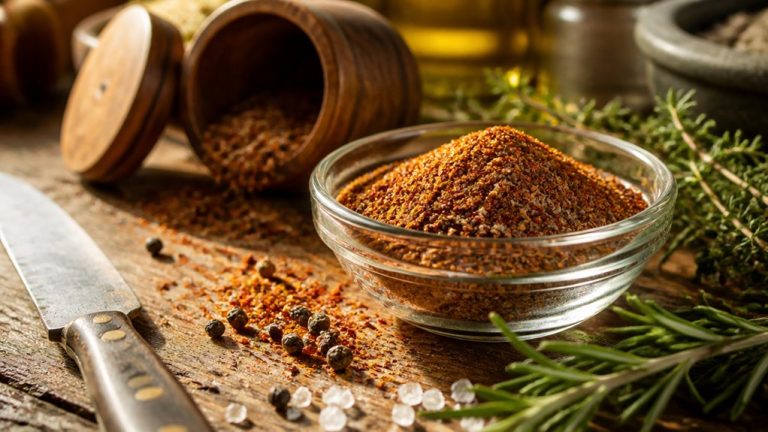
Incorporate your chosen spices—black pepper, garlic, onion, paprika, marjoram, mustard seed, or chile powder—measured accurately for balanced flavor. To enhance moisture and texture, mix in ice water gradually while stirring.
After thorough mixing, refrigerate the seasoned blend for 24 to 48 hours to allow full curing and flavor melding before stuffing. This resting step optimizes protein extraction and seasoning distribution, crucial for a consistent, safe smoked sausage.
Keeping the meat mixture thoroughly chilled below 40°F throughout mixing and stuffing helps maintain optimal texture and safety.
Grinding and Stuffing Tips for Perfect Sausage Links
Although seasoning and curing create the foundation for your sausage, grinding and stuffing determine its final texture and form.
Start by grinding the meat cold, using a coarse plate (around 10 mm) first to maintain structure. If you want a smoother bite, follow with a finer grind (approximately 4.5 mm).
Mix the ground meat until it becomes sticky. That’s protein extraction at work, essential for binding.
When stuffing, use hog casings sized 28 to 32 mm for standard links. Stuff tightly but avoid overfilling, which causes splitting.
After stuffing, prick any visible air pockets with a sterile needle to prevent bursting during cooking. Maintaining cold conditions throughout helps preserve fat integrity.
This guarantees even seasoning distribution, resulting in links with ideal texture and consistent shape.
For smaller snack sticks, collagen casings between 15mm and 21mm are recommended for better stuffing ease and product uniformity.
Smoking Smoked Sausage: Temperature and Wood Choices
When you’re smoking smoked sausage, it’s important to keep your temperatures between 225°F and 250°F. This range helps cook the sausage efficiently.
Alternatively, you can start at a lower temperature, around 130°F, and gradually increase the heat. This method really lets the flavors develop nicely!
Now, let’s talk about wood choices. Using hardwoods like apple, hickory, or oak is key because each type adds its own unique smoke flavor that pairs well with your sausage’s seasoning.
Maintaining thin, blue smoke during the process ensures a clean, mild smoke flavor without bitter notes.
Optimal Smoking Temperatures
When smoking sausage, controlling the temperature precisely is essential to developing the ideal texture, flavor, and safety of the final product.
Start with a drying phase around 110°F to 130°F to prevent casing splits and reduce surface moisture. Gradually increase temperature to 160°F–180°F to develop color and smoke penetration without overcooking.
Maintain internal sausage temperature at 160°F for meat or beef for safety.
| Smoking Stage | Temperature (°F) |
|---|---|
| Drying | 110 – 130 |
| Initial Smoke | 130 – 140 |
| Cooking Ramp-Up | 160 – 180 |
| Final Internal Temp | 160 (safe doneness) |
It is important to monitor the internal temperature by inserting a thermometer probe through the end and into the geometric center of the sausage for the most accurate reading.
Monitor closely. Temperature control guarantees flavor balance and prevents texture issues like casing rupture or dryness.
Best Wood Varieties
Which wood type you choose for smoking smoked sausage greatly influences its flavor profile and aroma intensity. Selecting the appropriate hardwood guarantees balanced smoke that complements the meat without overpowering it. For smoked sausage, you want woods that burn steadily and produce clean smoke.
Hickory: Delivers a strong, savory smoke ideal for meat blends, enhancing richness and depth.
Apple: Offers a mild, sweet aroma that imparts subtle fruity notes, perfect for delicate seasoning.
Oak: Provides medium intensity smoke with a slightly sweet, earthy character, versatile for most sausages.
Cherry: Adds a gentle, sweet smokiness and imparts a reddish hue to the sausage casing.
Using these woods, you control flavor nuances by adjusting wood quantity and smoking duration precisely. Choosing kiln-dried wood ensures consistent heat and clean smoke, enhancing the overall smoking experience.
Checking Internal Temperature for Safe, Delicious Sausage
Monitor the internal temperature of your smoked sausage carefully to guarantee both safety and peak flavor. Insert a calibrated digital thermometer into the center of the thickest link to get an accurate reading.
For meat and beef blends, aim for a minimum internal temperature of 160°F to ensure harmful bacteria are eliminated. Poultry-based sausages require 165°F. Check the temperature near the end of smoking, removing the sausage slightly early to allow for carryover cooking, which raises internal heat by a few degrees post-smoke.
Avoid relying on external indicators like color or firmness, as they don’t reliably reflect internal doneness. Consistent temperature monitoring prevents undercooking, which risks foodborne illness, and overcooking, which dries out the sausage. This ensures a safe and juicy final product.
After cooking, it is important to cool smoked sausages to 40°F (4°C) or below within two hours to slow bacterial growth and maintain safety.
Cooling, Storing, and Serving Your Homemade Smoked Sausage
After reaching the proper internal temperature, your smoked sausage still requires careful handling to preserve its quality and safety. Rapidly cooling the sausage in an ice bath stops residual cooking and firms the casing, preventing texture deterioration.
Resting allows juices to redistribute, enhancing sliceability and flavor. For storage, refrigerate cooked sausages for up to a week or freeze them for extended preservation.
When serving, consider traditional pairings or versatile uses in recipes.
Cool sausages immediately in ice water to halt cooking and tighten casings.
Rest sausages at room temperature briefly to stabilize internal juices.
Store refrigerated sausages below 40°F for short-term use or freeze at 0°F for months.
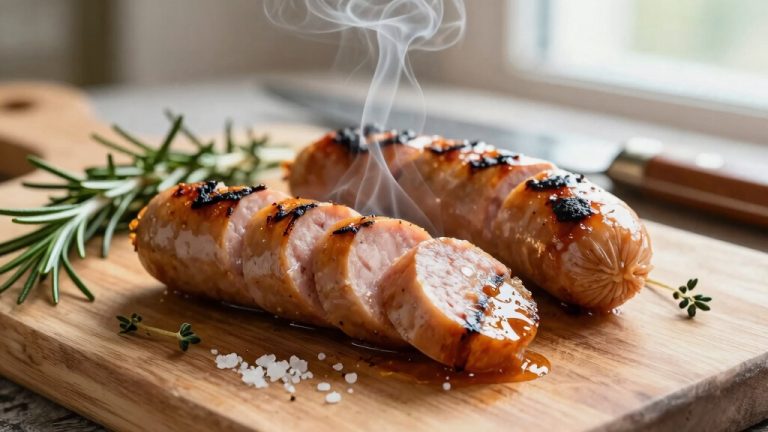
Serve sliced with mustard, in buns, or incorporated into soups and stews for best flavor integration.
Ensure to refrigerate smoked chicken sausage within one hour if hot to minimize bacterial growth risks.
Frequently Asked Questions
How Do I Clean and Prepare Hog Casings Before Stuffing?
To clean hog casings, rinse them thoroughly under cold running water to remove salt and debris.
Soak casings in warm water for at least 30 minutes to soften them.
Then, flush the inside by running water through the casing to clear any residual material.
Check for holes or weak spots by gently stretching.
Keep casings submerged in clean water until stuffing, changing water frequently to maintain freshness and prevent drying out.
Can I Use Alternative Meats Like Turkey or Venison for Smoked Sausage?
Yes, you can use alternative meats like turkey or venison for smoked sausage, but you’ll need to adjust fat content to about 30% for proper texture.
Both are leaner than meat, so adding meat fat or beef suet helps maintain juiciness and binding. Keep the meat cold during grinding to prevent fat smearing.
Also, monitor the internal temperature carefully: 165°F for turkey and 160°F for venison to guarantee safety and ideal doneness.
What Equipment Is Essential for Homemade Sausage Making at Home?
You’ll need a meat grinder with multiple plate sizes for coarse and fine grinding. A sturdy mixing bowl and a sausage stuffer or attachment for your grinder are necessary to fill casings evenly.
Use natural or synthetic casings and a sharp knife for trimming. A reliable digital meat thermometer guarantees safe internal temperatures.
For smoking, a controlled smoker with temperature settings between 110°F and 250°F is essential. Don’t forget pricking tools to remove air pockets after stuffing.
How Long Can Homemade Smoked Sausage Be Safely Stored in the Freezer?
You might worry frozen sausage loses flavor or texture, but if you wrap it tightly to avoid freezer burn, you can safely store homemade smoked sausage for up to 3 months.
Use airtight packaging like vacuum-sealed bags or heavy-duty foil, and label with the date.
Beyond 3 months, quality declines, but it remains safe if continuously frozen.
Always thaw it in the refrigerator to maintain texture and flavor.
Can I Freeze the Sausage Mixture Before Stuffing and Smoking?
Yes, you can freeze the sausage mixture before stuffing and smoking.
Make sure to tightly wrap it in airtight packaging to prevent freezer burn and preserve flavor.
Thaw the mixture slowly in the refrigerator to maintain proper texture and prevent bacterial growth.
Avoid refreezing once thawed.
Keep the meat cold during handling to prevent fat smearing and ensure even seasoning distribution for peak sausage quality after smoking.
Final Thoughts on Smoking, Cooling, and Storing Sausage
You’ve mastered balancing lean meat and fat for flavor and texture, carefully seasoned and cured each batch, and expertly ground and stuffed your links. Now, as you smoke with precision, choosing the perfect wood and controlling temperatures, you transform raw ingredients into smoky perfection.
From cold raw mix to hot, safe sausage, every step demands attention. Finally, cooling and storing seal in freshness, readying your homemade smoked sausage for savoring anytime.