Smoked Brisket at 300: Striking the Perfect Note
Smoking brisket at 300°F speeds up cooking while intensifying the bark’s flavor through enhanced Maillard reactions.
You’ll get a beautiful smoke ring and juicy, tender meat by carefully trimming fat, applying oil and rub, then managing smoker temps between 300–325°F.
Start unwrapped to build crust, then wrap to lock moisture and finish tenderizing at slightly higher heat. Resting is key to juicy slices. Master these steps, and your brisket will impress every time.
Ready to learn how?
Key Takeaways
- Smoking brisket at 300°F offers faster cooking while developing a rich, flavorful bark through enhanced Maillard reactions.
- Trim fat cap to about 1/4 inch, apply olive oil, and pierce meat to improve rub and smoke absorption.
- Maintain smoker temperature consistently between 300–325°F using hickory or oak wood for optimal smoke flavor.
- Smoke unwrapped until internal temperature reaches 160–170°F, then wrap to lock in moisture and continue cooking to 195–205°F.
- Rest brisket 30–60 minutes before slicing against the grain to preserve juiciness and tenderness.
Why Smoke Brisket at 300°F? Benefits and Considerations?

While traditional brisket smoking favors low and slow temperatures, choosing to smoke brisket at 300°F offers a compelling balance between speed and flavor development.
You’ll accelerate the cooking process without sacrificing that deep, smoky bark and tender interior. At this temperature, the Maillard reaction intensifies, creating a rich crust, while the brisket retains its juiciness through efficient fat rendering.
You’ll also find that your smoke ring develops beautifully with a steady, moderate heat. However, you must maintain precise temperature control to prevent drying out the meat.
Smoking at 300°F demands your attention but rewards you with a brisket that’s ready hours sooner than low-and-slow methods. This makes it ideal when time is tight but you still crave exceptional barbecue complexity and texture.
To manage moisture and tenderness effectively at this higher temperature, consider wrapping the brisket during the stall to accelerate cooking and preserve juiciness.
Prepping Your Brisket for Smoking at 300°F
Alright, let’s get your brisket ready for some serious smoking at 300°F! First things first, you’ll want to trim off any excess fat from the meat side. This is super important because it helps ensure that the smoke can really penetrate the meat, and trust me, nobody likes a greasy bite.
Once you’ve got that trimmed up, grab a paper towel and pat the brisket dry. This step is key! Then, drizzle some olive oil over the brisket. Don’t be shy with it! After that, it’s time for the dry rub. Go ahead and sprinkle it generously over all surfaces; we want a rich, flavorful crust that’s going to make your taste buds dance.
Oh, and here’s a little trick: use a knife to pierce the meat about an inch deep in a few spots. This helps the rub really sink in, and it’ll lock in those deep smoky flavors when you fire up your smoker.
You’re going to love the results! For the best cooking results, make sure to insert your temperature probe into the thickest part of the flat muscle to monitor the internal temperature accurately.
Trimming And Cleaning
Before you fire up the smoker, you’ll want to meticulously trim the brisket to guarantee prime smoke penetration and even cooking.
Start by removing excess fat from the meat side, leaving about a ¼-inch cap on the fat side to render slowly. Clean any silver skin or tough connective tissue that could hinder tenderness.
Pat the brisket dry with paper towels to make certain your rub sticks perfectly. Follow these steps to prep your brisket:
- Trim excess fat from the meat side carefully.
- Remove silver skin and any tough membranes.
- Pat the entire brisket dry with paper towels.
- Inspect for uniform thickness to promote even cooking.
This precise trimming sets the foundation for a beautifully smoked, tender brisket. Managing the fat cap orientation during cooking also optimizes heat distribution and enhances tenderness and flavor.
Applying Oil And Rub
Coat your brisket thoroughly with olive oil to create a slick surface that helps the dry rub adhere evenly and locks in moisture during smoking.
Start by drizzling oil over every inch of the trimmed, dried brisket, then massage it in to guarantee complete coverage.
This step not only promotes a beautiful bark but also prevents the rub from clumping or falling off during the cook.
Next, apply your dry rub generously, pressing it firmly into each surface.
Don’t hesitate to cover every nook and cranny; the rub forms the flavorful crust that defines smoked brisket.
For best results, ensure your smoker is preheated to around 300°F with steady temperature control before placing the meat inside.
Piercing For Flavor
After thoroughly oiling and rubbing your brisket, the next step is to enhance flavor absorption by piercing the meat.
Piercing one inch deep allows the rub to penetrate, infusing the brisket with bold, smoky nuances as it cooks at 300°F. To do this expertly:
- Use a sharp, clean skewer or probe to pierce evenly across the surface.
- Space the punctures about an inch apart to maximize rub infusion.
- Avoid overly large holes to retain the brisket’s natural juices.
- Focus on the flat and point sections where flavor uptake is essential.
This technique guarantees your brisket isn’t just seasoned on the surface but richly flavored throughout, elevating your smoked masterpiece with every bite.
Incorporating spritzing during cooking can further enhance moisture retention and flavor, helping to develop a flavorful bark without compromising tenderness.
Setting Up Your Smoker for a Perfect 300°F Cook
Ignite your smoker and carefully stabilize the temperature between 300 and 325°F using quality hickory or oak wood chunks to infuse your brisket with rich, smoky depth.
Position the grate so your brisket cooks evenly; placing it fat side down directly on the grate locks in moisture and flavor.
Insert a digital probe thermometer after the first two hours to monitor internal temperature precisely, ensuring it stays within the ideal range.
Maintain steady heat throughout; fluctuations can dry out your meat or disrupt smoke absorption. Use a reliable thermometer to track smoker temperature, adjusting vents or fuel as necessary.
This controlled environment is essential for developing the brisket’s tender texture and deep smoky profile that defines a perfect 300°F cook.
Remember to place wood chips or chunks directly into the flame disk bowl to generate consistent smoke and flavor during cooking.
Manage Smoking and Wrapping Phases at 300°F
When you reach the smoking phase at 300°F, focus on maintaining a steady temperature between 300 and 325°F while letting the brisket smoke unwrapped until its internal temperature hits around 160°F.
This usually takes 3 to 4 hours. This unwrapped stage is vital for developing a deep smoke ring and bark. Once it reaches 160°F, prepare to wrap the brisket carefully.
At 160°F, it’s time to wrap the brisket carefully for tender, juicy results.
Follow these steps to manage smoking and wrapping phases expertly:
- Place the brisket fat cap down in a pan with marinade or beef tallow.
- Apply an additional layer of rub on the exposed surfaces.
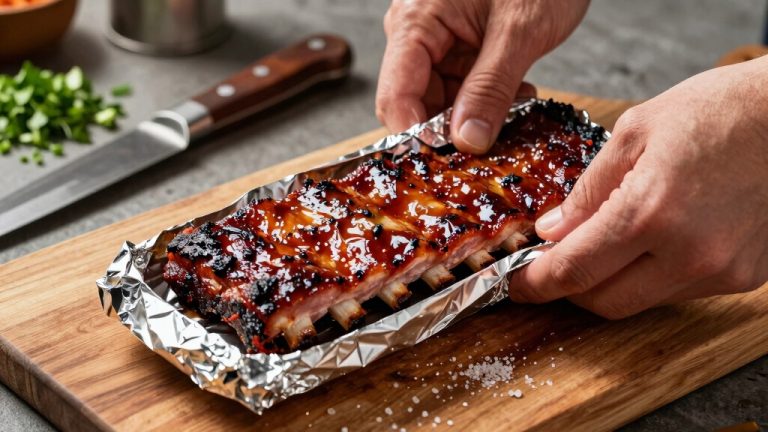
- Wrap tightly in foil or butcher paper at 160-170°F internal temperature.
- Flip the brisket so the fat cap faces up if your method calls for it.
This approach locks in moisture and accelerates tenderness during the next phase. Monitoring the internal temperature and tenderness carefully helps ensure the brisket reaches the ideal collagen breakdown for maximum juiciness.
Tips to Achieve Tenderness and Flavor at 300°F
Although maintaining a steady 300°F smoker temperature is essential, achieving exceptional tenderness and flavor hinges on closely monitoring internal temperatures and carefully timing your wrap and rest phases.
You want to smoke unwrapped until 160-170°F to develop bark, then wrap to lock in moisture. After wrapping, increase heat slightly to 325-350°F for faster tenderizing.
Use a probe to test tenderness at 195-205°F; it should slide in easily. Don’t rush resting; it lets juices redistribute, amplifying flavor and tenderness.
Controlling the smoker temperature within a consistent range ensures even cooking and prevents dryness.
| Phase | Target Temp (°F) | Duration | Key Tip |
|---|---|---|---|
| Unwrapped Smoke | 160-170 | ~3-4 hours | Develop deep bark |
| Wrapped Cook | 195-205 | 2-4 hours | Tenderize & lock moisture |
| Probe Test | 195-200 | As needed | Easy probe insertion |
| Rest | N/A | 30-60 minutes | Redistribute juices |
Rest and Slice Your 300°F Smoked Brisket
After pulling your brisket from the smoker, resting it properly becomes vital to locking in juices and enhancing tenderness. This pause allows the meat fibers to relax, redistributing moisture evenly for a succulent bite.
To master this pivotal phase, follow these steps:
- Rest your brisket for 30-60 minutes in a warm environment. Use a pre-heated cooler or wrap it in foil with a towel.
- Avoid slicing immediately; cutting too soon will cause precious juices to escape.
- When ready, identify the grain direction carefully to make certain each slice is against it. This guarantees tenderness.
- Slice brisket thinly and evenly, showcasing the perfect balance of smoke ring and juicy texture.
For longer resting times, wrapping your brisket tightly and insulating it in a preheated cooler helps maintain safe temperatures and moisture retention.
Frequently Asked Questions
Can I Use Other Wood Types Besides Hickory or Oak at 300°F?
Yes, you can use other wood types besides hickory or oak at 300°F. Woods like mesquite, cherry, apple, or pecan add unique flavors to your brisket.
Just remember, mesquite is stronger and can overpower if overused, while fruitwoods like cherry or apple offer a sweeter, milder smoke.
Choose woods that complement your taste preferences and balance intensity with brisket’s rich flavor for a perfectly smoked result every time.
How Long Should I Let the Rub Sit on the Brisket Before Smoking?
Coincidentally, letting your rub sit on the brisket for at least 30 minutes up to overnight can dramatically boost flavor penetration.
You’ll want to pat the meat dry first, apply olive oil, then rub generously. Wrapping it in plastic wrap and refrigerating allows the spices to meld deeply.
This resting period transforms a good brisket into an unforgettable one, intensifying seasoning and ensuring every bite bursts with smoky, savory goodness.
Is It Necessary to Pierce the Brisket Before Applying the Rub?
You don’t have to pierce the brisket before applying the rub, but doing so can really help.
Piercing about an inch deep pushes the rub into the meat’s surface, enhancing flavor penetration and creating a more intense, savory crust.
It’s a pro tip that elevates your brisket’s taste profile. If you want maximum seasoning impact, go ahead and pierce. It’s a simple step that makes a big difference.
Can I Smoke a Frozen Brisket Directly at 300°F?
Imagine trying to bake a frozen cake. It won’t cook evenly or develop the right texture.
Smoking a frozen brisket directly at 300°F isn’t ideal because it prolongs cooking time and risks uneven doneness.
You should thaw the brisket first to make certain the rub penetrates well and the smoke flavor develops evenly. Patience here pays off with tender, flavorful results instead of a tough, undercooked mess.
What’s the Best Way to Store Leftover Smoked Brisket?
The best way to store leftover smoked brisket is to wrap it tightly in butcher paper or aluminum foil.
Then place it in an airtight container or vacuum seal it to lock in moisture and flavor.
Refrigerate promptly and consume within 3-4 days.
For longer storage, freeze the brisket in portions, wrapped securely to prevent freezer burn.
When reheating, do it gently to preserve tenderness and juiciness.
Turning Heat Into Harmony: The Art of a Perfect Brisket
Smoking brisket at 300°F is like tuning a vintage guitar. You strike the right balance between heat and time to release rich, deep flavors without rushing the process.
Just as a musician listens closely to each note, you’ll want to monitor your brisket carefully. Wrap it at the perfect moment to lock in moisture. Master this, and you’ll turn a simple cut into a tender, smoky masterpiece that sings with every bite.