Brisket Stalled at 180: From Pause to Perfection
When your brisket stalls around 180°F, it’s due to evaporative cooling. Moisture escaping the meat’s surface absorbs heat, causing the temperature to plateau.
You can manage this by wrapping the brisket in foil or butcher paper at 165–170°F to trap steam and push through the stall faster.
Maintain a steady smoker temp near 225°F and avoid opening the smoker frequently to preserve humidity. Tackling these factors helps speed the cook without drying your brisket.
Keep going to explore advanced techniques for mastering the stall.
Key Takeaways
- The brisket stalls around 165–180°F due to evaporative cooling and collagen breakdown causing temperature plateau.
- Moisture evaporation cools the meat surface, preventing heat penetration and prolonging the stall around 180°F.
- Wrapping the brisket (Texas crutch) at 165–170°F traps steam, reduces evaporation, and helps push through the stall faster.
- Maintain steady smoker temperature (around 225°F) and avoid frequent opening to preserve humidity and reduce stall duration.
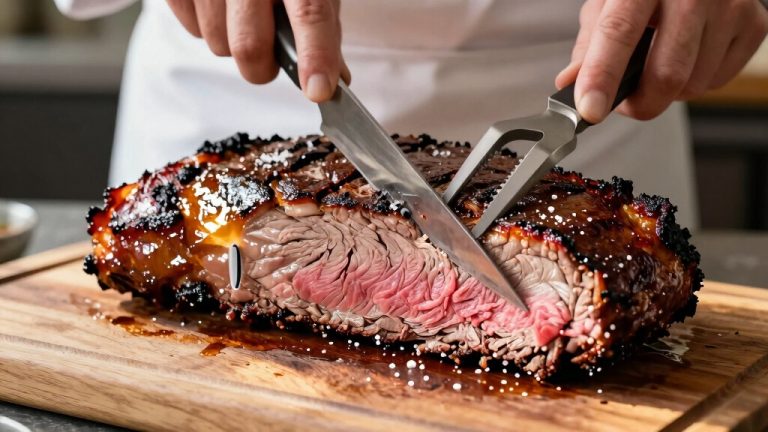
- Monitor internal temperature with a probe and test tenderness, aiming for 200–205°F final temp for optimal doneness.
Why Does Brisket Stall at 180°F?

Although brisket stalls most commonly between 150-170°F, you might notice it stalling at 180°F due to prolonged evaporative cooling on the meat’s surface that counteracts heat penetration.
Brisket can stall at 180°F when surface evaporation cools the meat, delaying internal heat rise.
When moisture evaporates extensively, it cools the exterior, balancing the heat input and causing the internal temperature to plateau.
You’ll find that this stall occurs when collagen breakdown and fat rendering intensify, increasing moisture loss.
Factors like smoker humidity, airflow, and rub composition also influence this late-stage stall.
To manage it, maintain stable smoker temps and consider wrapping your brisket around 165-170°F to reduce evaporative losses and speed through the stall.
Keeping an eye on moisture retention and adjusting airflow can help you avoid extended stalls near 180°F, ensuring even cooking and ideal tenderness.
Additionally, applying spritzing techniques during the cook can help maintain surface moisture and prevent excessive evaporative cooling that contributes to temperature stalls.
How Evaporative Cooling Causes the Brisket 180°F Stall?
You might find it interesting that when cooking a brisket, the internal temperature can hit a bit of a standstill. This happens because of evaporative cooling on the surface of the meat.
As moisture evaporates from the brisket, it cools down the exterior, which ends up offsetting the heat that’s trying to penetrate the meat.
So, what does this mean for your cooking process? Well, you’ll often see a temperature plateau around 180°F. Understanding this whole mechanism is key!
It can really help you manage that stall effectively and keep your cooking on track. Many pitmasters choose to mitigate this by wrapping the brisket around 165–170°F to trap moisture and accelerate cooking.
Evaporative Cooling Explained
When cooking brisket low and slow, evaporative cooling plays a crucial role in causing the temperature stall you often see around 180°F.
As moisture escapes the meat’s surface, it cools the brisket, counteracting the heat you’re applying. This cooling effect slows the internal temperature rise, creating that frustrating plateau. Understanding this helps you manage the stall effectively.
Keep these points in mind:
- Moisture evaporation cools the brisket’s exterior, preventing heat from penetrating efficiently.
- The stall typically lasts hours as the brisket’s surface moisture evaporates continuously.
- Wrapping the brisket traps moisture, reducing evaporative cooling and speeding up temperature rise.
This is why many pitmasters choose to wrap the brisket before it reaches the stall temperature zone to maintain temperature progression and tenderness.
Temperature Plateau Mechanism
Understanding how evaporative cooling drives the temperature plateau around 180°F helps you manage the brisket stall effectively.
As moisture evaporates from the brisket’s surface, it absorbs heat energy, counteracting the heat your smoker supplies. This evaporation cools the exterior, preventing internal temperature from rising despite continuous cooking.
You’ll notice the brisket’s temperature flatlines because heat struggles to penetrate while moisture loss intensifies. To break this plateau, consider wrapping the brisket around 165-170°F.
Wrapping traps moisture, reducing evaporation and allowing internal heat to climb past 180°F. Maintaining a stable smoker temperature also helps by providing consistent heat input.
Recognizing this mechanism enables you to anticipate the stall’s duration and apply techniques like the Texas crutch for efficient, tender results.
After cooking, it’s important to clean your smoker properly using interior surface cleaning techniques to maintain optimal performance and prevent buildup that can affect heat distribution.
Key Factors Affecting Brisket Stall Temperature and Length
Although the brisket stall is a natural part of low-and-slow cooking, several key factors influence both its temperature range and duration.
Understanding these helps you manage the stall effectively and predict cooking times more accurately.
The stall typically occurs due to evaporative cooling, but its exact temperature and length will vary based on conditions you control.
Smoker Temperature Stability: Fluctuating heat prolongs the stall, so maintain a steady temperature around 225°F for consistent progress.
Humidity Levels: Higher humidity slows moisture evaporation, reducing stall length. Dry environments intensify cooling effects.
Surface Moisture and Rub: The amount and type of rub influence how much moisture evaporates, affecting both stall intensity and timing.
Additionally, using a water pan inside the smoker can help maintain moisture and stabilize temperature during the stall.
When to Wrap Your Brisket to Beat the 180°F Stall?
Since the brisket stall can extend well beyond 180°F, you’ll want to wrap your meat strategically to minimize this plateau and lock in moisture.
The ideal time to wrap is around 165-170°F, just as the stall begins to slow temperature rise. Wrapping at this point, using foil or butcher paper, drastically reduces evaporative cooling, accelerating the internal temperature climb past 180°F.
Don’t wait until the brisket hits 180°F; wrapping too late prolongs the stall and risks drying the meat. Make sure your wrap is tight to trap steam, preserving tenderness and juiciness.
This Texas crutch technique shortens cook time and prevents temperature dips, so you can confidently push through the stall and reach probe tenderness efficiently.
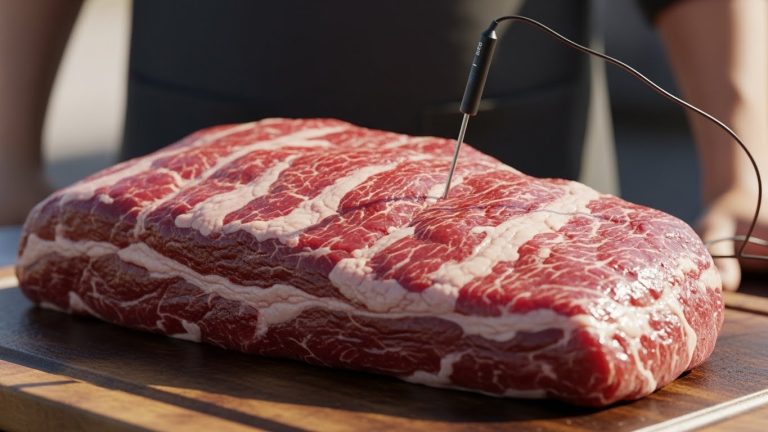
For best results, use a leave-in probe to continuously monitor the internal temperature without opening the smoker, ensuring precise timing for wrapping and pulling.
Managing Smoker Temperature and Humidity During the Stall
Wrapping your brisket at the right temperature helps control the stall. Maintaining steady smoker conditions plays an equally important role in managing that plateau.
You need to keep your smoker’s temperature consistent. Fluctuations can prolong the stall or cause uneven cooking. Likewise, controlling humidity inside the chamber helps reduce evaporative cooling, which is the main cause of the stall.
To optimize conditions during the stall, focus on these key points:
- Maintain smoker temp around 225°F to balance steady heat without drying out the meat.
- Use a water pan or add moisture sources to keep relative humidity between 50-70%, reducing surface evaporation.
- Avoid frequently opening the smoker door to prevent heat and humidity loss, which disrupts the cooking environment.
Additionally, placing water or cast iron pans above the meat can help sustain humidity levels and prevent the bark from drying out during the stall.
How to Speed Up the Brisket Stall Without Drying It Out?
To speed up the brisket stall without drying it out, you need to carefully balance moisture retention with heat application.
Start by wrapping your brisket tightly in foil or butcher paper once it hits 165-170°F. This Texas crutch method traps moisture, reducing evaporative cooling and accelerating internal temperature rise.
Maintain a stable smoker temperature around 225°F to guarantee consistent heat without overcooking the exterior. Avoid opening the smoker frequently, which releases humidity and prolongs the stall.
You can also add a water pan inside the smoker to increase ambient humidity, protecting the brisket’s surface from drying out.
Finally, monitor the internal temperature closely using a reliable probe. This way, you can remove the wrap at the right moment to preserve tenderness and juiciness while pushing through the stall efficiently.
Using temperature consistency techniques ensures even cooking and prevents toughness during this critical phase.
Ideal Internal Temperature After Breaking the 180°F Stall
Once your brisket breaks that pesky 180°F stall, it’s time to focus on hitting that sweet spot for final internal temperature. You really want to aim for somewhere between 200-205°F for the best tenderness.
Just a little tip: after you take it out of the smoker, the carryover cooking will raise the temperature by another 5-10°F, so keep that in mind when you check it.
And while you’re keeping an eye on the temperature, don’t forget to pay attention to the meat’s tenderness, too! Balancing both will help you nail that perfect brisket without the risk of overcooking. Happy smoking!
To maximize tenderness and flavor, be sure to rest the brisket properly after cooking by wrapping it tightly and insulating it to retain heat and moisture.
Optimal Target Temperature
Although the brisket often stalls around 180°F, you should continue cooking it until the internal temperature reaches between 204°F and 210°F for peak tenderness.
This range guarantees full collagen breakdown, resulting in the signature juicy, tender texture you want. Don’t rush this phase; patience pays off.
Keep these tips in mind:
- Use a reliable meat probe to monitor temperature accurately.
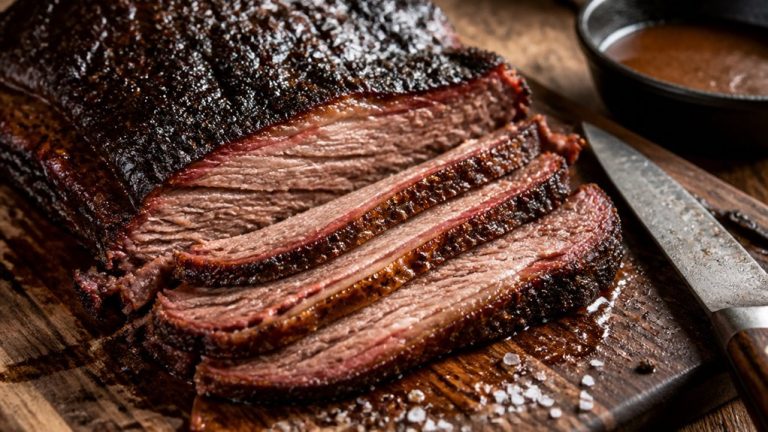
- Test tenderness by inserting the probe; it should slide in like softened butter.
- Maintain steady smoker heat to avoid temperature fluctuations.
Aim to keep the smoker temperature within the 225–250°F range to ensure even low-and-slow cooking and proper collagen breakdown.
Carryover Cooking Effects
When your brisket breaks through the 180°F stall, carryover cooking continues to gently raise its internal temperature by 5 to 10 degrees.
So you should plan to remove it from the smoker around 180-185°F. This prevents overcooking while ensuring the brisket reaches the ideal doneness as residual heat finishes collagen breakdown.
Use an instant-read thermometer to monitor temperature carefully during this phase. After removal, tent the brisket loosely with foil and let it rest for at least 30 minutes.
This allows juices to redistribute and the internal temperature to stabilize. Avoid wrapping tightly, which can trap steam and soften the bark.
Tenderness Temperature Range
As your brisket breaks through the 180°F stall, you’ll want to focus on reaching the ideal internal temperature range, typically between 204°F and 210°F, to achieve peak tenderness.
This range guarantees the collagen fully breaks down, rendering the meat tender and juicy without drying it out. Use a probe to test for softness rather than relying solely on temperature.
Keep these tips in mind:
- Monitor tenderness: Insert the probe; it should slide in with little resistance at 204-210°F.
- Maintain smoker temp: Keep a consistent heat to avoid temperature drops that prolong cooking.
- Rest properly: After removal, let the brisket rest to allow carryover cooking and redistribute juices.
Hitting this range is key to turning your brisket stall into a perfectly tender masterpiece.
Frequently Asked Questions
What Tools Best Measure Brisket Doneness Beyond Internal Temperature?
Forget relying solely on a magic thermometer that whispers sweet nothings about temperature.
Real brisket mastery demands a meat probe or a fork test.
You’ll want a probe that slides in like butter, signaling tenderness beyond numbers.
A digital instant-read thermometer helps, but feel the brisket’s resistance.
It should offer gentle pushback, not a wrestling match.
Combine these tools with your senses, and you’ll nail perfect doneness every time.
Can Stall Timing Vary With Different Brisket Sizes?
Yes, stall timing definitely varies with brisket size.
Larger briskets hold more moisture and take longer for evaporative cooling to balance heat input, extending the stall’s duration.
Smaller cuts stall for less time since they lose moisture faster and heat penetrates quicker.
To manage this, adjust your wrapping timing and smoker temperature based on size.
Wrap earlier for bigger briskets to shorten the stall and maintain consistent heat for steady progress.
How Does Wrapping Affect Brisket Bark Texture?
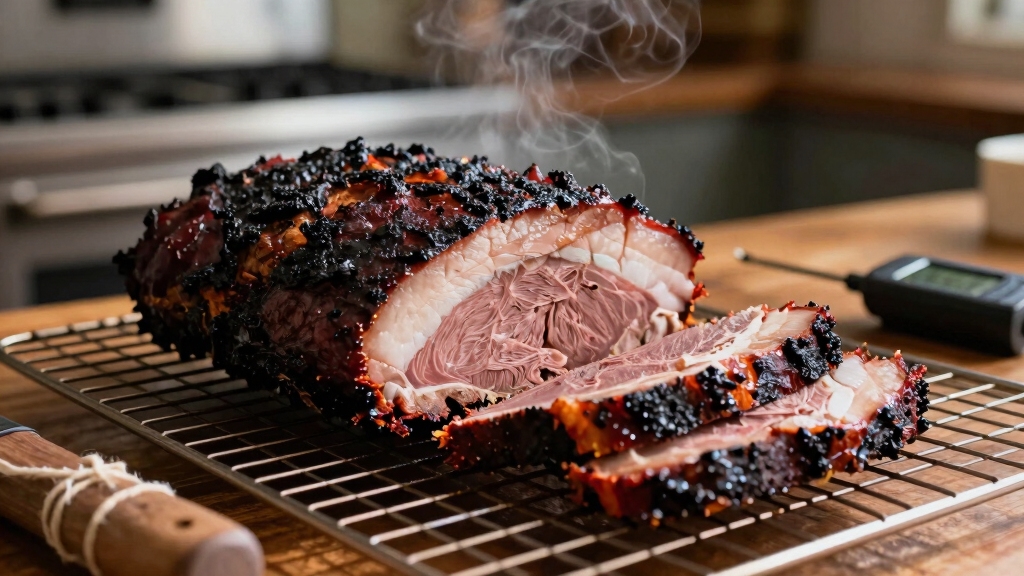
Wrapping brisket softens the bark because it traps moisture, preventing the crust from drying and crisping further.
If you want a firmer bark, wait longer before wrapping or wrap loosely with butcher paper instead of foil.
You can also unwrap during the final stage to re-crisp the bark.
Balancing moisture retention and bark texture requires timing your wrap carefully to avoid sogginess while speeding up the cook.
What Are Common Mistakes During the Brisket Stall Phase?
You might find yourself stuck, watching the temperature flatline like a calm sea, and making common mistakes during the brisket stall phase.
Don’t rush to unwrap too early; that lets moisture escape, drying your bark.
Avoid inconsistent smoker temps; fluctuating heat drags out the stall.
Also, skipping the wrap at 165-170°F means you miss speeding through the plateau.
Finally, don’t panic and crank heat. Steady patience guarantees tender, juicy results.
Does Brisket Stall Differ Between Charcoal and Pellet Smokers?
Yes, brisket stall can differ between charcoal and pellet smokers.
With charcoal, you’ll often see more temperature fluctuations and variable humidity, which can extend or intensify the stall.
Pellet smokers usually maintain steadier temps and humidity, leading to a more predictable stall.
To manage this, you should monitor your smoker closely, adjust airflow in charcoal setups, and consider wrapping earlier if you notice a prolonged stall, regardless of smoker type.
Elevate Your Brisket: Conquer the Stall with Confidence
Think of the 180°F stall as the brisket’s moment of transformation, like a caterpillar pausing before becoming a butterfly. Embrace this natural pause by carefully managing temperature, humidity, and wrapping timing to help your brisket break through without drying out.
With patience and precision, you’ll turn that stubborn stall into tender, juicy perfection. Proving that mastering this critical phase is the key to elevating your barbecue from good to extraordinary.